

Have you ever wondered what happens after a playful cat scratch? While it might seem harmless, that tiny scratch could lead to an infection called Cat Scratch Disease.
Understanding what bacteria causes this illness is key to protecting yourself and your furry friend. You’ll discover the hidden culprit behind Cat Scratch Disease and learn how to stay safe. Keep reading—your health and your cat’s well-being depend on it.
Credit: emedicine.medscape.com
Bacteria Behind Cat Scratch Disease
Cat scratch disease is an infection that people get from cats. It causes swelling and fever. The disease comes from certain bacteria.
Understanding which bacteria cause this disease helps in diagnosis and treatment. Two main types of bacteria are linked to it.
Bartonella Henselae As The Main Culprit
Bartonella henselae is the main bacteria causing cat scratch disease. Cats carry this bacteria in their blood. When a cat scratches or bites, it can pass the bacteria to humans.
This bacteria lives in cat fleas and spreads among cats. It usually causes mild symptoms but can be serious in some people.
Other Potential Bacterial Agents
Other bacteria can sometimes cause similar symptoms. These bacteria are less common but worth knowing about.
| Bacteria | Source | Notes |
| Bartonella quintana | Body lice | Rare cause, similar symptoms |
| Francisella tularensis | Wild animals, ticks | Can cause tularemia, mistaken for cat scratch disease |
| Pasteurella multocida | Cat and dog bites | Causes skin infections, not classic cat scratch disease |

Credit: en.wikipedia.org
Transmission Pathways
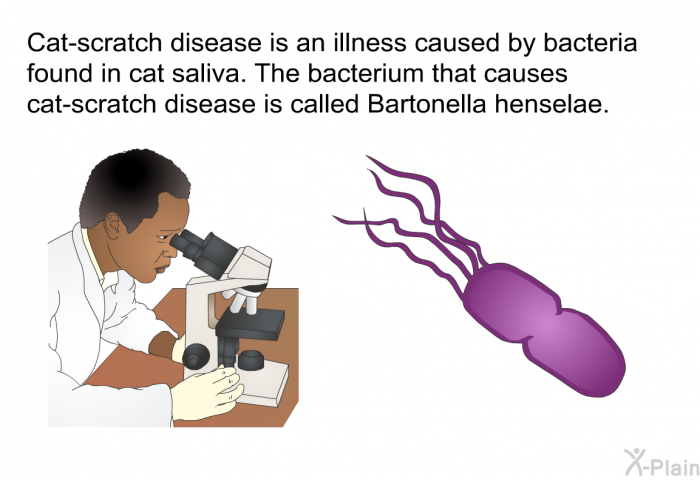
Cat scratch disease is caused by a bacteria called Bartonella henselae. This bacteria spreads from cats to humans through certain ways. Understanding these pathways helps prevent the disease.
The main sources of infection are cats and the fleas that live on them. Both play key roles in passing the bacteria to people.
How Cats Spread The Bacteria
Cats carry Bartonella henselae in their blood. They usually do not show signs of illness. The bacteria live in their saliva and under their claws. When a cat scratches or bites, the bacteria can enter the human skin.
- Scratches from infected cats can cause small skin breaks.
- Bites allow the bacteria to enter deeper layers of skin.
- Contact with cat saliva on broken skin or eyes can also spread the bacteria.
Role Of Fleas In Transmission
Fleas live on cats and carry Bartonella henselae between them. Flea bites do not directly infect humans, but fleas spread the bacteria among cats. This makes many cats carriers of the bacteria.
| Flea Role | Effect on Transmission |
|---|---|
| Carry bacteria from cat to cat | Increases number of infected cats |
| Flea feces on cat skin | Can enter scratches or wounds on humans |
| Flea bites | Do not directly infect humans |
Symptoms Linked To The Bacteria
Cat Scratch Disease is caused by a specific type of bacteria. This bacteria enters the body through a scratch or bite from a cat. The infection can cause several symptoms that vary from mild to more serious.
Understanding the symptoms helps in early detection and treatment. The signs show how the body reacts to the bacteria.
Common Signs In Humans
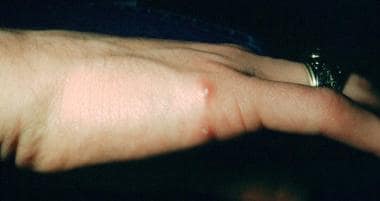
Most people with Cat Scratch Disease develop symptoms near the site of the scratch or bite. These signs usually appear within two weeks after contact with the cat.
- Red bump or blister at the scratch site
- Swollen and tender lymph nodes near the affected area
- Fever that may come and go
- Fatigue or feeling tired
- Headache and body aches
- Loss of appetite
In some cases, the skin bump may turn into a small sore. The swollen lymph nodes can last for weeks.
Variations Based On Immune Response
The symptoms can change depending on a person’s immune system strength. People with strong immunity may only have mild symptoms.
Those with weaker immune systems can face more severe problems. The infection might spread to other parts of the body.
- More intense fever and chills
- Enlarged liver or spleen
- Eye infections causing redness and pain
- Severe headaches or neurological symptoms
- Skin rashes beyond the scratch area
Sometimes, serious complications need medical care. Early diagnosis is important for all immune responses.
Diagnosing The Infection
Cat scratch disease is caused by the bacteria Bartonella henselae. Diagnosing this infection can be tricky because its symptoms often look like other illnesses.
Doctors use different tests to find out if Bartonella bacteria cause the infection. Accurate diagnosis helps in giving the right treatment.
Laboratory Tests For Bartonella
Several lab tests detect Bartonella infection. These tests help confirm if the bacteria cause the symptoms.
- Serology tests check for antibodies made against Bartonella.
- Polymerase chain reaction (PCR) detects Bartonella DNA in blood or tissue.
- Cultures grow the bacteria from a sample, but this method is slow.
- Immunohistochemistry stains tissue samples to find Bartonella cells.
Challenges In Accurate Diagnosis
Diagnosing cat scratch disease can be difficult. Symptoms may be mild or overlap with other infections.
| Challenge | Description |
| False negatives | Tests may miss Bartonella if bacteria levels are low. |
| Cross-reactivity | Antibody tests can react with other bacteria. |
| Delayed antibody response | Antibodies may not appear early in the infection. |
| Sample collection | Getting the right tissue or blood sample is hard. |
Treatment Approaches
Cat scratch disease is caused by bacteria called Bartonella henselae. This infection usually comes from a scratch or bite by a cat. Treatment helps reduce symptoms and prevent complications.
Doctors use different methods to treat cat scratch disease. These include antibiotics and managing any health problems that arise.
Antibiotic Options
Antibiotics are the main treatment for cat scratch disease. They help kill the bacteria and speed up healing. Not all cases need antibiotics, but they are helpful for severe symptoms.
Common antibiotics used include azithromycin, doxycycline, and rifampin. Doctors choose the best one based on the patient’s age and health.
- Azithromycin is often the first choice for treatment.
- Doxycycline works well for older children and adults.
- Rifampin is used if the infection is severe or does not improve.
- Some cases may need a combination of these antibiotics.
Managing Complications
Sometimes, cat scratch disease can cause problems like swollen lymph nodes or eye infections. Managing these issues is important to avoid long-term damage.
Doctors may recommend pain relievers or warm compresses to reduce swelling and pain. If an eye infection occurs, special eye drops or treatment may be needed.
- Swollen lymph nodes may need drainage if very large.
- Eye infections require prompt medical care.
- Severe infections might need longer antibiotic treatment.
- Follow-up visits help ensure full recovery.
Preventing Cat Scratch Disease
Cat Scratch Disease is caused by bacteria called Bartonella henselae. It spreads through cat scratches or bites. Understanding prevention can help keep you safe.
Knowing how to handle cats and control fleas is important. These steps reduce the risk of Cat Scratch Disease.
Safe Cat Handling Practices
Handle cats gently to prevent scratches. Teach children to be gentle with pets too. Avoid rough play that might lead to scratches or bites.
Wash hands after playing with cats. This helps remove any bacteria that may have transferred. Use soap and water for effective cleaning.
- Trim cat’s claws regularly
- Use toys for play, not hands
- Keep cats indoors to reduce fights
Controlling Flea Infestations
Fleas can carry the bacteria that causes Cat Scratch Disease. Keeping fleas away from your cat is important.
Use flea control products regularly. Check with your vet for safe options. Clean your home to reduce flea habitats.
- Vacuum carpets and furniture often
- Wash pet bedding regularly
- Consider flea treatments for all pets
Credit: www.patedu.com
Frequently Asked Questions
What Bacteria Causes Cat Scratch Disease?
Cat scratch disease is caused by the bacterium Bartonella henselae. It is transmitted through scratches or bites from infected cats. This bacterium infects the lymph nodes and causes inflammation, leading to symptoms like swelling, fever, and fatigue.
How Do Cats Transmit Bartonella Henselae?
Cats transmit Bartonella henselae mainly through scratches or bites. Fleas on cats can also carry the bacteria. When a cat scratches or bites, the bacteria enter the skin and cause infection in humans.
What Are Common Symptoms Of Cat Scratch Disease?
Common symptoms include swollen lymph nodes near the scratch, fever, fatigue, and headache. A small bump or blister may appear at the scratch site. Symptoms usually develop within 3 to 14 days after the scratch.
Can Cat Scratch Disease Be Treated With Antibiotics?
Yes, cat scratch disease can be treated effectively with antibiotics. Azithromycin is commonly prescribed to reduce symptoms and speed recovery. Most patients recover fully with proper medical care.
Conclusion
Cat Scratch Disease is caused by the Bartonella henselae bacteria. It spreads mainly through scratches or bites from cats. Most people get mild symptoms like swelling and fever. Keeping cats clean and avoiding rough play helps prevent infection. Seeing a doctor early can lead to quick treatment.
Knowing the cause helps you stay safe around cats. Stay aware, protect yourself, and enjoy your pets safely.

Lily Purrington is the founder of MyKittyPicks.com, a cozy corner of the web dedicated to helping cat lovers discover the best cat products, furniture, toys, and home decor ideas.
A lifelong cat enthusiast, Lily shares trusted tips, honest product recommendations, and stylish inspiration designed to keep kitties happy and homes beautiful.
Her mission is simple: to bring together practical advice and purr-fect picks that make life better for cats and the people who love them.


