

Have you ever wondered exactly when your cat will give birth after mating? If you’re a cat owner or soon-to-be cat parent, knowing the timeline can help you prepare and care for your furry friend better.
Understanding what happens inside your cat’s body during this time can ease your worries and make the experience smoother for both of you. Keep reading to discover the key signs and important facts about your cat’s pregnancy, so you’re ready when the big day arrives.
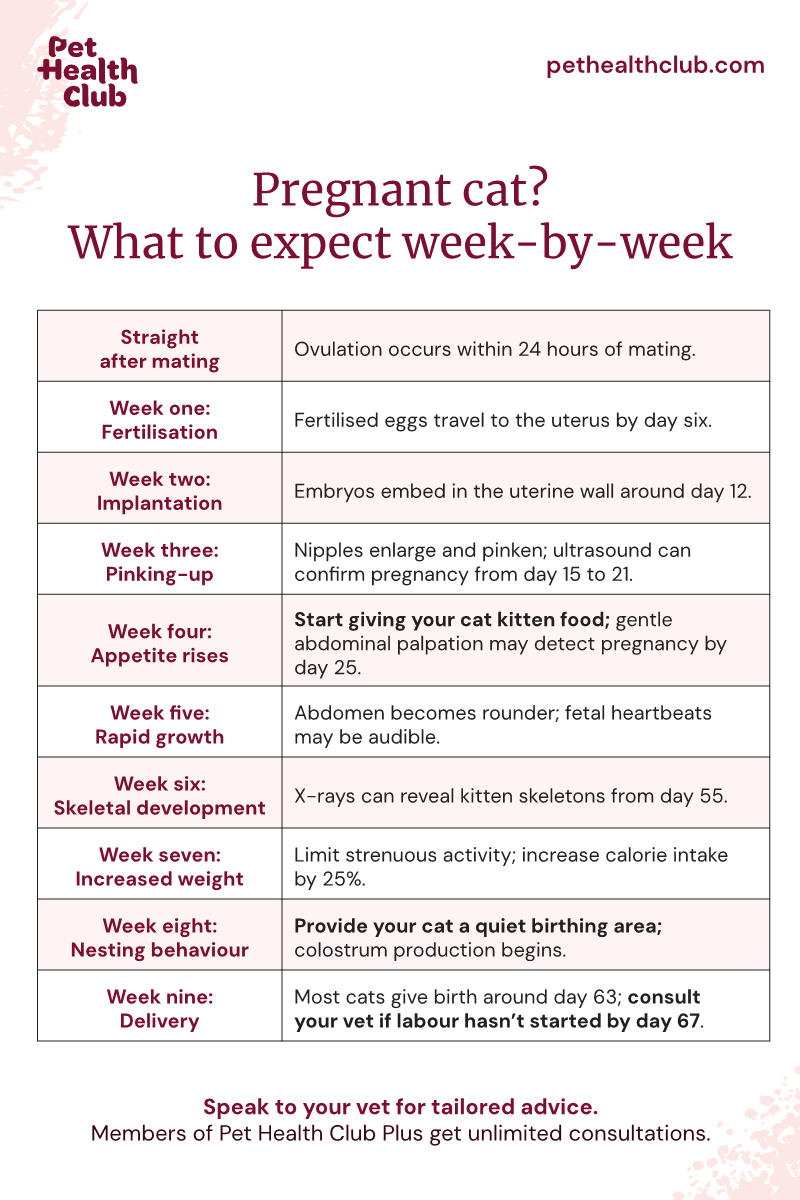
Credit: www.pethealthclub.com
Cat Pregnancy Basics
Understanding cat pregnancy basics is key for every cat owner. Pregnancy in cats starts right after mating. It lasts about 63 to 65 days. Knowing the early signs helps in giving proper care. Cats show different behaviors during this period. Observing these signs can confirm if your cat is pregnant. The fertilization process is quick but very important. It sets the stage for healthy kittens.
Signs Of Mating
- Female cats in heat become more vocal and restless.
- They may rub against objects or people more often.
- Male cats show increased interest and may fight for the female.
- Mating is usually quick but can happen multiple times.
- After mating, females might clean themselves frequently.
Fertilization Process
Fertilization happens inside the female cat shortly after mating. The male’s sperm meets the female’s eggs in her fallopian tubes. This union starts the development of embryos. The fertilized eggs then move to the uterus. There, they attach to the uterine wall and grow. This process is the beginning of pregnancy in cats. It usually takes a few days for the embryos to settle.
Timeline Of Cat Pregnancy
The timeline of cat pregnancy is a fascinating journey from mating to birth. Understanding this timeline helps cat owners prepare for new kittens. The process is quick but involves important stages. Each stage affects the health and growth of the kittens. Knowing what happens during pregnancy can ease any worries.
Gestation Period
The gestation period is the time from mating to birth. For cats, it usually lasts about 63 to 65 days. This means kittens are born roughly two months after mating. Some cats may give birth a few days earlier or later. The gestation period is shorter than many other animals. It is important to monitor the cat’s health during this time.
Key Development Stages
- Week 1-2:Fertilized eggs travel to the uterus and begin to implant.
- Week 3:Embryos start to develop organs and a heartbeat.
- Week 4-5:Kittens’ features like eyes and limbs begin to form.
- Week 6-7:Fur grows, and kittens start to move inside the womb.
- Week 8-9:Kittens fully develop and prepare for birth.
Each stage is critical for healthy kittens. Regular vet visits during pregnancy ensure everything goes well.
Behavior Changes Before Birth
As your cat nears the time to give birth, you may notice several changes in her behavior. These shifts are her way of preparing for the arrival of her kittens. Understanding these signs can help you provide the right care and support during this crucial period.
Nesting Instincts
Many cats develop a strong nesting instinct just before giving birth. Your cat might start searching for a quiet, safe spot to settle down. She could scratch or rearrange bedding, showing a clear desire to create a comfortable space for her kittens.
Sometimes, cats hide in unusual places like closets or under furniture. If you notice this, consider setting up a cozy nesting box with soft blankets nearby. Have you observed your cat acting more secretive or restless lately?
Physical Symptoms
Along with behavioral changes, physical symptoms become more apparent as birth approaches. Your cat’s body temperature may drop slightly within 24 hours before labor begins. This is a subtle but important sign to watch for.
You might also see her licking her genital area more frequently or experiencing mild contractions. Appetite changes are common too—she may eat less or refuse food altogether. Paying attention to these signs helps you anticipate when the big moment is near.
Credit: www.pets4homes.co.uk
Labor And Delivery Phases
Understanding the labor and delivery phases in cats is crucial for any cat owner expecting kittens. These phases mark the transition from pregnancy to birth, and being familiar with them helps you provide the right care and support. Let’s look closely at what happens as your cat prepares to welcome her kittens.
Early Labor Signs
Early labor can start subtly. You might notice your cat becoming restless or seeking a quiet, secluded spot. She may pace or groom herself more than usual, showing signs of discomfort.
Other common signs include:
- Loss of appetite
- Frequent vocalizations or meowing
- Swollen or softened nipples
- Increased licking of the genital area
Pay close attention if her temperature drops slightly below normal, which often signals that labor is imminent within 24 hours. Have you seen your cat acting strangely before giving birth? These clues can help you prepare.
Birthing Process
The birthing process itself can last several hours, sometimes longer for first-time mothers. Contractions begin and become more intense as the kittens move through the birth canal.
During delivery, each kitten is usually born within 15 to 30 minutes of the previous one. You may see your cat actively pushing or hear her vocalize with effort.
Immediately after each kitten is born, the mother will bite through the umbilical cord and clean the kitten to stimulate breathing. If she seems confused or doesn’t attend to the kitten, you might need to step in gently.
Remember, not every birth follows the exact same timeline. Have you prepared a comfortable, quiet space for your cat? Creating the right environment can make all the difference during this critical time.
Care Tips For Pregnant Cats
Pregnant cats need special care to stay healthy and prepare for their kittens. This care helps the mother and her babies grow strong. Monitoring her health and environment is important during pregnancy. Small changes in her diet and routine can make a big difference.
Nutrition Needs
A pregnant cat requires more energy and nutrients than usual. Feeding high-quality kitten food supports her growth and the babies inside her. This food has extra protein, vitamins, and minerals. Offer several small meals each day to keep her energy steady.
- Ensure fresh water is always available.
- Avoid giving treats or human food that can upset her stomach.
- Do not change her diet suddenly; switch foods gradually if needed.
Veterinary Support
Regular vet visits ensure the mother and kittens are healthy. The vet can confirm pregnancy and estimate the due date. Vaccinations and parasite control protect the mother and her unborn kittens. Watch for any signs of illness or discomfort and contact the vet immediately if needed.
- Schedule check-ups every few weeks during pregnancy.
- Discuss any concerns about diet or behavior with the vet.
- Prepare for the birth by asking the vet for advice on delivery.
Credit: www.petscare.com
Common Complications To Watch
Watching your cat go through the birthing process is a beautiful experience, but it can also bring unexpected challenges. Knowing the common complications that might arise helps you stay calm and ready to act. Recognizing these issues early can make a huge difference in your cat’s health and the safety of her kittens.
Signs Of Distress
Pay close attention if your cat shows any unusual behavior during labor. Signs like prolonged straining without delivering a kitten for more than 30 minutes can be a red flag. Excessive panting, shaking, or vocalizing more than usual might indicate pain or discomfort.
Another warning sign is if your cat seems lethargic or loses interest in her kittens immediately after birth. Watch for abnormal discharge that has a foul smell or is greenish in color, as this could suggest an infection. Have you noticed your cat trying to push but nothing is happening? This often points to a blockage or a problem with the kitten’s position.
When To Seek Help
Don’t hesitate to contact your vet if you spot any distress signs. If labor lasts longer than 24 hours or if more than two hours pass between kittens, it’s time to get professional help. Emergency care can save both the mother and her kittens in many cases.
Also, if your cat appears weak or collapses, immediate veterinary intervention is crucial. Keep emergency numbers handy and have a plan for quick transport. Your prompt response can prevent complications from becoming life-threatening.
Frequently Asked Questions
How Long Is A Cat’s Pregnancy After Mating?
A cat’s pregnancy, or gestation, typically lasts 58 to 67 days. Most cats give birth around 63 days after mating. This period can vary slightly based on breed and health.
When Can You Tell A Cat Is Pregnant?
Signs of pregnancy usually appear 15 to 18 days after mating. Look for swollen nipples, weight gain, and behavioral changes. A vet can confirm pregnancy with an ultrasound after three weeks.
How Many Kittens Does A Cat Usually Have?
Cats usually give birth to 3 to 5 kittens per litter. The number can range from 1 to 12, depending on the cat’s age and breed.
What Are The Signs A Cat Is About To Give Birth?
A cat about to give birth shows nesting behavior, restlessness, and loss of appetite. She may also vocalize more and have a drop in body temperature.
Conclusion
Cats usually give birth about 63 to 65 days after mating. It’s a brief but crucial period for them. Knowing this timeline helps prepare for new kittens. Ensure a calm, safe space for the mother cat. Provide nutritious food and plenty of water.
Watch for signs of labor, like nesting or restlessness. Being ready ensures a smooth birthing process. Support from humans can make a big difference. A little knowledge goes a long way in caring for cats. Stay informed and attentive. Your furry friend will appreciate it.
Happy kitten season ahead!

Lily Purrington is the founder of MyKittyPicks.com, a cozy corner of the web dedicated to helping cat lovers discover the best cat products, furniture, toys, and home decor ideas.
A lifelong cat enthusiast, Lily shares trusted tips, honest product recommendations, and stylish inspiration designed to keep kitties happy and homes beautiful.
Her mission is simple: to bring together practical advice and purr-fect picks that make life better for cats and the people who love them.


