

Have you ever noticed your cat staring intently at your camera or phone while you’re trying to capture that perfect picture? You might wonder, can cats see cameras, or is it just a coincidence?
As a cat owner, understanding your feline friend’s perception can feel like unlocking a mystery. Cats are curious creatures with senses that sometimes seem almost magical. We’re diving into the fascinating world of feline vision and exploring whether your cat is aware of that lens pointed in their direction.
Get ready to uncover some surprising truths about how your cat sees the world—and your camera. Stick around, and you might just discover the secret to capturing their attention and those picture-perfect moments effortlessly.
Credit: spectrum.ieee.org
Cat Vision Basics
Understanding how cats see the world helps you grasp whether they notice cameras around them. Cat vision is quite different from human vision, shaped by their hunting instincts and nocturnal lifestyle. Knowing these basics can change how you interact with your feline friend during photo sessions or when setting up security cameras.
How Cats See The World
Cats have a unique way of processing visual information. They see better in low light than humans, thanks to a special layer behind their retina called the tapetum lucidum. This layer reflects light, giving cats a natural night-vision advantage.
Your cat is more sensitive to movement than to color. So, a blinking camera light or the subtle movement of a lens might catch their attention faster than the device itself. Have you noticed your cat staring at a phone screen or a camera lens? That’s because their eyes are wired to spot motion quickly.
Differences Between Cat And Human Eyes
| Feature | Cat Eyes | Human Eyes |
|---|---|---|
| Color Perception | Limited; mostly blues and greens | Full spectrum; can see reds and many colors |
| Night Vision | Excellent; enhanced by tapetum lucidum | Poor; no reflective layer |
| Field of View | About 200 degrees | About 180 degrees |
| Motion Detection | Highly sensitive | Moderate sensitivity |
These differences explain why your cat might react oddly around cameras. They don’t see devices the way you do. Instead, they pick up on glints, movements, and lights, which can either intrigue or spook them.
Cats And Camera Detection
Cats have sharp senses that help them detect changes in their environment. Cameras can be new objects in a cat’s space. This can make cats curious or cautious. Understanding how cats notice cameras helps pet owners capture natural moments.
Can Cats Notice Camera Lenses?
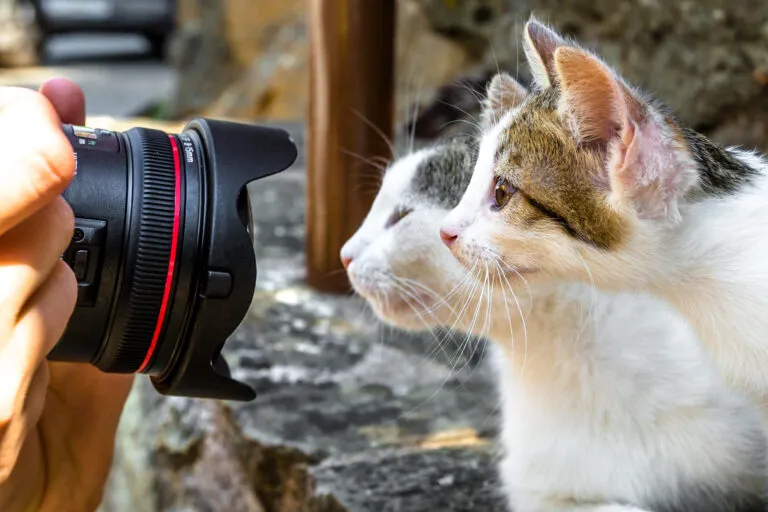
Yes, cats can notice camera lenses. The shiny surface of a lens catches light and reflects it. This reflection can attract a cat’s attention quickly. Cats often stare at moving or shiny objects. The lens sometimes looks like a small eye to them. This can cause cats to watch the camera closely or even touch it.
Cats may also detect the slight movement of the lens when it adjusts focus. This small change can be enough to pique their curiosity. Some cats might try to paw at the lens or move around it. Others might simply observe from a distance.
Reaction To Flash And Infrared Lights
Camera flashes can startle cats. Bright, sudden lights are unusual for them. Cats’ eyes are sensitive, so flash can cause blinking or looking away. Some cats may become anxious or avoid the camera after a flash.
Infrared lights used in night cameras are less visible to cats. Cats can see some infrared light, but not all. This means they might not react as much to infrared as to flashes. Still, some cats notice the small red glow from infrared LEDs and may be curious or cautious.
Understanding these reactions helps in choosing the right camera settings for pet photography. It ensures cats stay calm and comfortable during photo sessions.
Behavior Around Cameras
Understanding how cats behave around cameras can give you a clearer picture of whether they notice these devices and how they feel about them. Some cats might be fascinated by the lens, while others could find the camera intimidating. Observing your cat’s reactions helps you decide the best way to capture their natural moments without causing stress.
Curiosity Or Fear?
Many cats display curiosity when they first encounter a camera. They may approach it, sniff around, or even paw at it. This behavior shows they’re investigating an unfamiliar object in their space.
On the other hand, some cats might react with fear. They could back away, hide, or avoid the area altogether. This reaction often happens if the camera has lights or makes noises that the cat finds unsettling.
Have you noticed your cat’s initial reaction to a camera? Their response can tell you a lot about their comfort level and personality.
Common Cat Responses To Cameras
- Sniffing and pawing:Cats often try to understand new objects by smelling and touching them.
- Staring intently:Some cats fix their gaze on the camera, possibly trying to figure out what it is.
- Ignoring:After a quick inspection, many cats simply ignore the camera and go about their business.
- Hiding or retreating:If the camera is too intrusive or noisy, cats might seek a safe spot away from it.
- Vocalizing:Some cats meow or hiss if they feel uncomfortable or threatened by the camera.
Knowing these typical responses can help you adjust your approach. For example, using silent cameras or letting your cat get used to the device slowly can make photo sessions more enjoyable for both of you.
Credit: www.zooplus.co.uk
Impact Of Cameras On Cats
Cameras are becoming a common presence in many homes, and pets like cats are often caught on film. But how does this technology affect your feline friend? Understanding the impact of cameras on cats helps you create a comfortable environment for them, while still capturing those adorable moments.
Stress And Anxiety Factors
Some cats may feel uneasy around cameras. The small blinking lights or unfamiliar sounds from certain models can trigger stress. You might notice your cat avoiding the room or acting restless when a camera is active.
Have you seen your cat freeze or hide when a camera is turned on? This reaction is often a sign of anxiety. It’s important to watch your cat’s body language closely to spot these subtle signs.
Stress can also build up if the camera is placed too close to your cat’s favorite spots. Cats value their personal space, so positioning the camera thoughtfully can reduce their discomfort.
Positive Effects Of Camera Presence
On the flip side, some cats get used to cameras quickly and don’t mind their presence at all. In fact, the camera can even become part of their daily environment, helping them feel safe and observed.
Many pet owners use cameras to monitor their cats when they’re away. This can provide peace of mind and reduce separation anxiety for both you and your pet. Knowing you can check in anytime might even encourage you to spend more quality time together.
Some cats may even show curiosity toward cameras, sniffing or pawing at them. This interaction can be a playful and enriching experience for your cat, adding a new element to their environment.
Tips For Photographing Cats
Photographing cats can be a rewarding yet challenging experience. Their unpredictable moods and quick movements demand patience and a thoughtful approach. Here are some tips to help you capture your cat’s personality while keeping the process enjoyable for both of you.
How To Capture Natural Cat Expressions
Start by observing your cat when they are relaxed and in their usual environment. Cats show their true personalities when they feel comfortable, so avoid forcing poses or sudden movements.
Use a quiet camera or your phone’s silent mode to prevent startling your cat. Natural light works best—it highlights their eyes and fur without harsh shadows.
Try to get down to their eye level. This perspective creates intimacy and makes your photos more engaging. Focus on their eyes; a sharp gaze can tell a powerful story.
Have some treats or toys ready. They can help you catch your cat’s attention and bring out playful or curious expressions without stress.
Avoiding Stress During Photoshoots
Stress ruins any photo session, so keep the environment calm. Choose a familiar spot where your cat feels safe, and keep sessions short to prevent fatigue.
Watch your cat’s body language. If the ears go back or the tail twitches, it’s time to pause or stop. Respect their limits—you want to build trust, not fear.
Try not to use flash; sudden bright lights can scare cats and cause red-eye in photos. Instead, rely on natural or soft indoor lighting.
Remember, patience is key. Sometimes the best shots come after waiting quietly and letting your cat explore at their own pace.
Technology And Cat Interaction
Technology has changed how cats and owners interact at home. Cameras play a big role in this new relationship. They help owners see what cats do when alone. Cats react differently to cameras based on design and features. Understanding this helps improve cat care and monitoring.
Smart Cameras With Pet Features
Smart cameras now include special pet-friendly features. These features make cameras less scary for cats. Some have motion sensors that track cat movements. Others use infrared light, invisible to cats, for night vision. Two-way audio lets owners talk to cats remotely. Certain models even dispense treats to reward cats.
- Motion detection tuned for small pets
- Infrared night vision invisible to cats
- Two-way audio for remote interaction
- Automatic treat dispensers for engagement
These smart cameras keep cats comfortable and entertained. They also help owners feel connected anytime.
Using Cameras To Monitor Cat Behavior
Cameras reveal hidden cat habits and moods. Watching cats shows their playtime, rest, and curiosity. Owners can spot signs of stress or illness early. Cameras help track changes in eating or litter box use. Videos give clues about social behavior and preferences. This information improves care and environment for cats.
- Observe daily routines without disturbance
- Detect health problems early
- Understand cat’s social and playful side
- Adjust home setup based on cat’s needs
Using cameras wisely leads to happier, healthier cats. It strengthens the bond between cats and owners.

Credit: www.reddit.com
Frequently Asked Questions
Can Cats Recognize Camera Lenses?
Cats cannot specifically recognize camera lenses. However, they notice reflections or lights from lenses. This often catches their attention or curiosity.
Do Cats React To Camera Flashes?
Yes, many cats react to camera flashes. The sudden bright light can startle or confuse them. Some cats may avoid cameras because of this.
Can Cats See Digital Camera Screens?
Cats can see digital camera screens but don’t understand images. They may be attracted to movement on the screen. However, they don’t perceive photos as humans do.
Are Cats Afraid Of Cameras?
Some cats may be wary of cameras due to unfamiliar sounds or lights. Fear varies depending on the cat’s temperament and past experiences with cameras.
Conclusion
Cats notice cameras mostly by sight and sound. They do not understand what cameras do. Cats may stare, paw, or ignore cameras completely. Their curiosity depends on the cat’s personality. Cameras do not bother most cats for long. Watching cats around cameras shows their natural behavior.
Knowing how cats react helps pet owners feel at ease. Cameras capture moments, but cats live in their world. Observing pets is fun, with or without technology.

Lily Purrington is the founder of MyKittyPicks.com, a cozy corner of the web dedicated to helping cat lovers discover the best cat products, furniture, toys, and home decor ideas.
A lifelong cat enthusiast, Lily shares trusted tips, honest product recommendations, and stylish inspiration designed to keep kitties happy and homes beautiful.
Her mission is simple: to bring together practical advice and purr-fect picks that make life better for cats and the people who love them.


