

Your cat’s ID tag is more than just a tiny accessory—it’s a lifeline. Imagine your furry friend slipping out the door or darting under a neighbor’s fence.
What would someone need to know to get your beloved pet safely back to you? Choosing exactly what to put on your cat’s ID tag can make all the difference between a quick reunion and a stressful search. You’ll discover the essential details that should be on your cat’s tag to keep them safe and ensure you’re always just a call away.
Keep reading, because your cat’s safety depends on it.
Key Details To Include
Choosing what to put on your cat’s ID tag can make all the difference if your furry friend ever wanders off. The key is to keep the information clear, concise, and most importantly, useful to anyone who finds your pet. What details should you focus on to increase the chances of a safe return?
Cat’s Name
Your cat’s name is the first and most important detail to add. It helps the finder call your cat calmly and build trust quickly. Imagine a stranger shouting out a name your cat doesn’t recognize—it might just make them hide.
Owner’s Phone Number
The owner’s phone number is the direct line to bringing your cat home. Use a number you always have access to, like your cell phone. Avoid using work numbers that might be hard to reach after hours.
Alternate Contact Info
Adding an alternate contact, such as a trusted friend or family member’s phone number, covers you if you can’t answer. This simple step has saved many pets because someone else can respond quickly. Think about who else knows your cat and can help in an emergency.

Credit: www.amazon.ca
Additional Helpful Information
Adding extra details on a cat ID tag can help others care for your pet better. These details provide important clues about your cat’s health and lifestyle. They can guide someone who finds your cat on what to do next. Small bits of helpful information can make a big difference in an emergency.
Medical Conditions
List any health problems your cat has. This could include allergies, diabetes, or heart issues. This info helps a rescuer avoid giving harmful food or medicine. It also tells vets what to watch for in an emergency. Keep this section short but clear.
Microchip Notification
Note if your cat has a microchip implanted. Write something like “Microchipped” on the tag. This alerts people to scan for more contact info. Microchips provide a backup way to identify your cat. It increases the chances of a safe return.
Indoor Or Outdoor Cat
State if your cat stays indoors or roams outside. This detail guides a finder on how to handle your cat. Outdoor cats may be more cautious or scared. Indoor cats might need quicker help to get back home. This simple note improves your cat’s safety.
Tag Material And Size
Choosing the right material and size for your cat’s ID tag is essential. The tag should last long and remain easy to read. It must withstand daily wear and tear. The size should be suitable for your cat’s comfort and visibility of the details.
Durable Materials
Tags made from strong materials last longer. Stainless steel is a popular choice. It resists rust and damage well. Aluminum is lightweight and durable. It also stays shiny for a long time. Plastic tags are light but less durable. Avoid tags that easily break or fade. A good tag handles scratching and moisture.
Readable Font Size
Font size affects how easy the tag is to read. Use a clear, simple font. Avoid fancy or cursive styles. The letters must be large enough to see quickly. Small fonts make reading hard from a distance. Make sure important info like phone number is bold and clear. Balance size with tag space for all info.
Tag Design Tips
Designing your cat’s ID tag is more than just picking a cute shape or color. The design affects how quickly someone can read the information, which can be crucial if your cat ever gets lost. Simple choices in layout and symbols can make a big difference in clarity and usefulness.
Clear Layout
Keep your cat’s ID tag layout simple and easy to read at a glance. Use a font size that’s large enough to see without squinting, and avoid cluttering the tag with too much text. Prioritize essential details like your cat’s name and your phone number.
Think about spacing too. Leaving enough room between lines and characters helps prevent confusion, especially in dim lighting or from a distance. You want someone to quickly identify your pet and contact you without hesitation.
Use Of Symbols Or Icons
Adding small symbols or icons can help convey important information fast. For instance, a phone icon next to your contact number immediately signals where to call. You might also use a heart symbol to show your cat is loved and cared for.
Be careful not to overcrowd the tag with too many icons. Choose one or two that add meaning without distracting from the text. Have you noticed how a simple paw print or a medical symbol can catch the eye and communicate vital info instantly?
Updating Your Cat’s Tag
Keeping your cat’s ID tag updated is crucial for their safety. A tag with outdated or incorrect information can delay their return if they get lost. Regular updates ensure that anyone who finds your cat can reach you quickly and easily.
When To Update Info
Update your cat’s tag whenever there are changes to your contact details. Have you recently moved or changed your phone number? Make sure the new address or phone number appears clearly on the tag.
Also, review the tag if your cat’s health status changes. Adding a note about allergies or medical conditions can help in emergencies.
Don’t forget to check the tag’s condition regularly. If the engraving fades or the tag becomes damaged, it’s time for an update.
How To Replace Tags
Replacing your cat’s tag doesn’t have to be complicated. You can order new tags online with updated information or visit your local pet store for quick engraving services.
Choose durable materials like stainless steel or brass for longevity. Tags with clear, legible fonts make a big difference when someone is trying to read the info quickly.
Attach the new tag securely to your cat’s collar. Double-check the attachment to prevent the tag from slipping off during play or outdoor adventures.

Credit: us.amazon.com
Choosing The Right Tag Style
Choosing the right tag style for your cat’s ID is essential. Include your phone number and the cat’s name for quick identification. You might also add a secondary contact or address for extra safety.
Choosing the right tag style for your cat’s ID is important. A well-chosen tag ensures your pet’s safety and adds a touch of personality. Different styles suit different needs and preferences. Let’s explore some popular options.Traditional Tags
Traditional tags are classic and widely used. They are usually metal or plastic. These tags hang from your cat’s collar. They come in various shapes like circles, hearts, or bones. You can engrave your contact information on them. They’re affordable and easy to replace. Some offer fun colors and designs. Always check the engravings for readability.Smart Tags
Smart tags use technology for enhanced safety. They often include QR codes or NFC chips. Scanning provides your contact details and more. Some connect to apps for real-time updates. They’re a bit pricier but offer advanced features. Ideal for tech-savvy pet owners. Ensure your cat is comfortable wearing a slightly bulkier tag.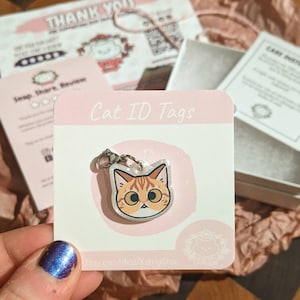
Credit: www.etsy.com
Frequently Asked Questions
What Essential Information Belongs On A Cat Id Tag?
A cat ID tag should include your cat’s name, your phone number, and your address. This helps others contact you quickly if your cat gets lost. Including a secondary contact number is also helpful for emergencies. Avoid overcrowding the tag to keep it readable.
Should I Include My Cat’s Medical Info On The Id Tag?
Including critical medical information, like allergies or medications, on the ID tag can be lifesaving. Keep it brief, such as “Diabetic” or “Needs meds. ” For detailed info, carry a separate medical card. This ensures your cat gets proper care if found.
How Can I Make My Cat’s Id Tag Durable And Readable?
Choose a sturdy material like stainless steel for durability. Use clear, large fonts for easy reading. Avoid plastic tags that can break or fade. Regularly check and clean the tag to maintain visibility. A durable tag lasts longer and helps your cat stay safe.
Is It Necessary To Update My Cat’s Id Tag Regularly?
Yes, updating your cat’s ID tag is crucial. Change contact details if you move or change phone numbers. Review the tag every six months to ensure all info is current. This helps prevent delays in reuniting with your pet if lost.
Conclusion
A clear and simple cat ID tag keeps your pet safe. Include your cat’s name, your phone number, and address. This helps others contact you quickly if your cat gets lost. Avoid too much information; keep it easy to read.
A well-made tag gives peace of mind and protects your furry friend. Small effort, big safety. Always check the tag’s condition and update details when needed. Your cat deserves to be found easily, no matter what.

Lily Purrington is the founder of MyKittyPicks.com, a cozy corner of the web dedicated to helping cat lovers discover the best cat products, furniture, toys, and home decor ideas.
A lifelong cat enthusiast, Lily shares trusted tips, honest product recommendations, and stylish inspiration designed to keep kitties happy and homes beautiful.
Her mission is simple: to bring together practical advice and purr-fect picks that make life better for cats and the people who love them.


