

You know how frustrating it is to find cat puke stains on your carpet or furniture. It’s messy, smelly, and seems impossible to get rid of.
But don’t worry—cleaning those stains doesn’t have to be a nightmare. In this guide, you’ll learn simple, effective steps to remove cat puke stains quickly and completely. By the end, your home will look fresh again, and you’ll feel confident handling any future messes with ease.
Keep reading to discover the secrets to spotless surfaces and a happier home.

Credit: www.reddit.com
Causes Of Cat Vomit Stains
Cat vomit stains happen for various reasons. Understanding these causes helps in cleaning effectively. Cat vomit often contains food, bile, or hairballs. These substances create different types of stains. Knowing the cause can guide you to the right cleaning method.
Common Reasons Cats Vomit
- Eating too fast or overeating
- Hairballs from grooming
- Food allergies or intolerance
- Sudden diet changes
- Ingesting spoiled food or foreign objects
- Illness or digestive issues
- Stress or anxiety
Types Of Stains Left Behind
Cat vomit stains vary in color and texture. They depend on what the cat has vomited.
- Food stains:Often yellow, brown, or green. Can be oily and sticky.
- Bile stains:Bright yellow or orange. Usually watery and acidic.
- Hairball stains:Thick, with hair and mucus. May be dark brown or greenish.
- Mixed stains:Combination of food, bile, and hair. Harder to clean.
Immediate Actions To Take
Acting fast is key when dealing with cat puke stains. Immediate actions help prevent permanent damage and lingering odors. Quick steps make cleaning easier and more effective. Start by handling the mess carefully. Then take measures to stop the stain from spreading further.
Removing Excess Vomit
Use paper towels or a cloth to gently lift the vomit. Avoid rubbing as it pushes the stain deeper. Scoop up solids with a spoon or spatula. Dispose of waste in a sealed bag to control odor. Pat the area lightly to absorb moisture. This prepares the surface for deeper cleaning.
Avoiding Stain Spread
Limit traffic around the stain to stop spreading. Place old towels or newspapers around the area. Avoid using too much water which can enlarge the stain. Blot instead of wiping to keep the mess contained. Keep pets and children away until cleaned. These steps keep the stain tight and easier to treat.
Cleaning Solutions To Use
Use mild detergents or enzyme cleaners to break down cat puke stains effectively. Blot the area gently with a clean cloth to avoid spreading. Rinse with water and let it dry completely to prevent odor.
Cleaning up after a cat’s unfortunate accident can be a hassle. The right cleaning solution makes it easier to remove cat puke stains. Different solutions work best for different types of stains. Below, discover effective options that cater to various preferences and needs.Homemade Remedies
Homemade solutions are cost-effective and gentle on fabrics. A mix of vinegar and water is a popular choice. Combine equal parts of vinegar and water in a spray bottle. Spray the mixture on the stain and let it sit for 10 minutes. Blot with a clean cloth until the stain lifts. Baking soda is another household staple for stain removal. Sprinkle it over the affected area. Let it sit for 15 minutes to absorb odors. Vacuum the powder to reveal a fresher surface.Commercial Cleaners
Commercial cleaners offer convenience and specialized formulas. Enzymatic cleaners are effective for organic stains like cat puke. These products break down proteins, eliminating stains and odors. Follow the instructions on the label for best results. Oxygen-based cleaners are another option. They use oxygen to lift stains without harsh chemicals. Apply the cleaner and let it work for several minutes. Blot the area with a clean cloth until the stain disappears. Both homemade and commercial solutions have their benefits. Choose what suits your needs and preferences.
Credit: www.reddit.com
Step-by-step Cleaning Process
Removing cat puke stains can seem tough, but a clear process helps. Acting fast improves results and keeps fabrics fresh. Follow these simple steps to clean effectively and avoid lingering odors.
Pre-treating The Stain
Start by gently scraping off solids using a spoon or dull knife. Avoid rubbing to prevent spreading the stain. Blot the area with a clean cloth to soak up moisture.
Apply a stain remover or a mix of water and mild detergent. Let it sit for 10-15 minutes. This loosens the stain and prepares the fabric for washing.
Washing And Rinsing
Use cold water to wash the fabric; hot water can set stains. Choose a gentle cycle if using a washing machine. Add an enzyme-based detergent to break down proteins in the stain.
Rinse thoroughly to remove all soap and residue. Repeat washing if the stain is still visible. Avoid drying before the stain is fully gone.
Drying Techniques
Air dry the fabric first, as heat can fix any remaining stain. Place the item in a well-ventilated area. Check the stain after drying; repeat cleaning if needed.
For carpets or upholstery, use a fan to speed up drying. Avoid direct sunlight to prevent fabric fading. Once dry, vacuum to restore texture and remove any loosened particles.
Deodorizing And Disinfecting
After removing the visible cat puke stain, deodorizing and disinfecting the area is crucial to prevent lingering smells and harmful bacteria. Without this step, your home might retain unpleasant odors and become a breeding ground for germs. Tackling both odor and cleanliness ensures a fresh, safe space for you and your furry friend.
Natural Deodorizers
Natural ingredients can effectively neutralize odors without harsh chemicals. Baking soda is a top choice—you can sprinkle it generously over the stain, let it sit for at least 30 minutes, then vacuum it up. It absorbs moisture and odors, leaving your carpet or fabric fresher.
White vinegar is another natural deodorizer. Mix equal parts water and vinegar in a spray bottle and lightly mist the area after cleaning. The vinegar smell fades quickly and helps break down any remaining organic matter, reducing odor and discouraging bacteria.
Have you tried essential oils? A few drops of lavender or tea tree oil mixed with water can add a pleasant scent while offering mild antibacterial properties. Just be sure your cat isn’t sensitive to these oils before use.
Chemical Options
If natural solutions don’t fully eliminate the smell, there are chemical products designed specifically for pet stains. Enzymatic cleaners work by breaking down the proteins in cat vomit, attacking the root cause of the odor. These are widely available and safe for most surfaces.
Disinfectants with antibacterial properties can also help sanitize the area after cleaning. Look for pet-safe labels to avoid harmful effects on your cat. Always test a small spot first to ensure the cleaner won’t damage your carpet or upholstery.
Have you noticed some cleaners leave a strong chemical smell behind? Choosing products with low VOCs or fragrance-free formulas can keep your home smelling clean without overwhelming scents. Your nose and your cat will thank you.
Handling Different Surfaces
Cleaning cat puke stains can be tricky because each surface reacts differently to cleaning agents and methods. Knowing how to handle carpets, upholstery, and hard floors separately can save you time and prevent further damage. Let’s look at the best ways to tackle stains on these common surfaces.
Carpets And Rugs
Start by gently scraping off any solid bits with a spoon or dull knife to avoid pushing the stain deeper. Blot the area with paper towels instead of rubbing to lift moisture without spreading the stain.
Mix a solution of warm water and a few drops of dish soap. Apply it sparingly using a clean cloth, then blot again to lift the stain. Avoid soaking the carpet, as excess moisture can cause mold or damage the padding underneath.
If the smell lingers, sprinkle baking soda over the damp area once dry, leave it for a few hours, then vacuum thoroughly. Have you noticed how quickly baking soda neutralizes odors? It’s a simple trick that works wonders.
Upholstery
Upholstery fabric can be delicate, so test any cleaner on a hidden spot first. Use a cloth dipped in a mild detergent solution to dab the stain gently. Avoid saturating the fabric, which might leave water marks or cause shrinkage.
After blotting, use a wet cloth to remove soap residue, then blot dry with a clean towel. Have you ever tried using club soda for freshening upholstery? Its carbonation helps lift stains without harsh chemicals.
For stubborn stains, a vinegar and water mix can be effective, but always test first. Remember, patience is key—treat the stain in small sections rather than all at once to avoid spreading.
Hard Floors
Hard floors like tile, hardwood, or laminate require a different approach since liquids can seep into cracks or damage finishes. Quickly scoop up solids and wipe the area with a damp cloth.
Use a gentle cleaner suitable for your floor type. For hardwood, a mix of water and a few drops of dish soap works well, but avoid harsh chemicals or excessive water. On tiles or laminate, you can use a mild vinegar solution to clean and disinfect.
Dry the area promptly to prevent slipping or damage. Have you checked your floor’s care instructions lately? Using the right cleaner protects your investment and keeps your floors looking great longer.
Preventing Future Stains
Preventing future cat puke stains helps keep your home clean and fresh. Taking care of your cat’s health and making smart changes at home reduces the chance of accidents. Small steps make a big difference in avoiding messy stains.
Diet And Health Tips For Cats
A healthy diet supports your cat’s digestion and reduces vomiting. Feed your cat high-quality food made for its age and health needs. Avoid sudden changes in diet to prevent stomach upset.
- Provide fresh water daily to keep your cat hydrated.
- Feed smaller, more frequent meals instead of large portions.
- Watch for signs of allergies or food intolerance.
- Schedule regular vet check-ups to catch health issues early.
- Keep your cat’s weight in a healthy range to reduce stress on the body.
Household Precautions
Set up your home to prevent accidents and stains. Choose easy-to-clean surfaces and keep your cat’s eating area tidy. Use washable mats under food bowls to catch spills.
- Clean litter boxes daily to encourage proper use.
- Keep toxic plants and chemicals out of reach.
- Provide a calm, quiet space for your cat to relax.
- Remove items your cat might chew that upset their stomach.
- Monitor your cat’s behavior for stress or anxiety signs.
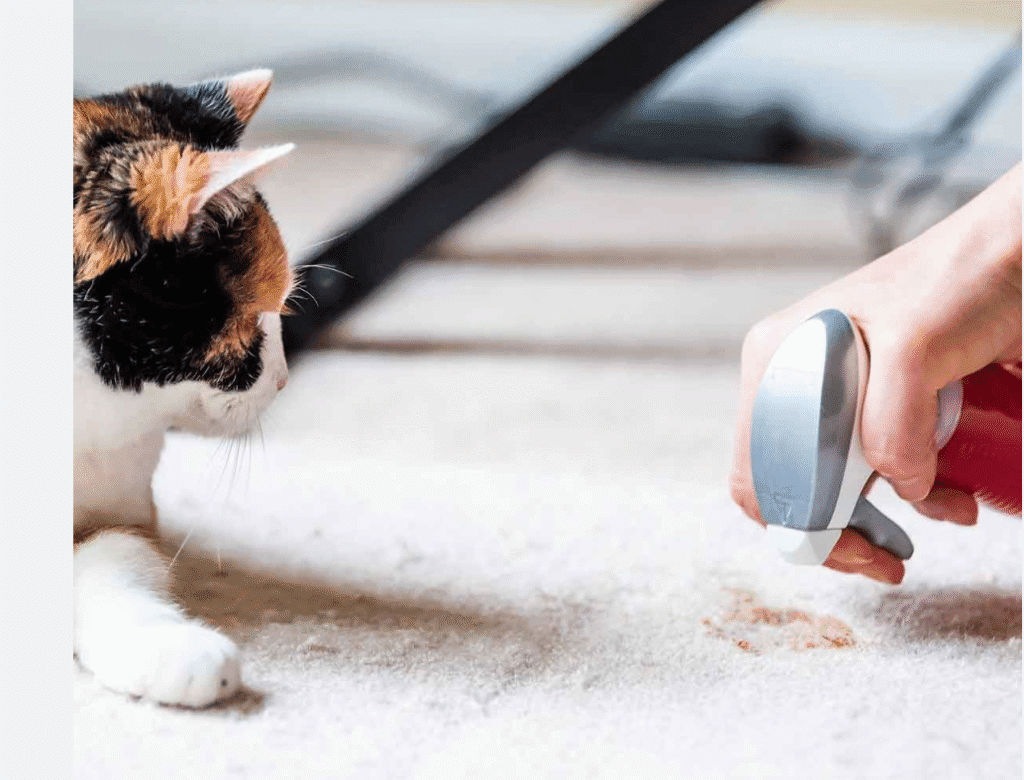
Credit: www.burgoscleaning.com
Frequently Asked Questions
How Do I Quickly Remove Fresh Cat Puke Stains?
Blot the stain immediately with paper towels to absorb moisture. Use cold water and mild detergent to clean the area gently. Avoid rubbing to prevent spreading. Dry the spot with a clean cloth for best results.
What Household Items Remove Cat Puke Stains Effectively?
White vinegar, baking soda, and mild dish soap work well. Apply vinegar solution first, then sprinkle baking soda to neutralize odor. Finish by cleaning with dish soap and cold water. Always test on a small area first.
Can Enzymatic Cleaners Remove Cat Puke Stains Completely?
Yes, enzymatic cleaners break down proteins in cat vomit. They effectively remove stains and odors without harsh chemicals. Follow product instructions for best results. These cleaners are safe for most fabrics and carpets.
How To Prevent Cat Puke Stains From Setting Permanently?
Clean up fresh vomit immediately with cold water and blotting. Avoid heat, which sets stains. Use enzymatic cleaners for deep stain removal. Regularly wash affected areas to prevent lingering odors and discoloration.
Conclusion
Cleaning cat puke stains does not have to be hard. Act quickly to stop the stain from setting. Use gentle cleaners that are safe for your carpet or fabric. Blot the area, do not rub it. Rinse and dry well to avoid smells.
Regular cleaning keeps your home fresh and tidy. Remember, patience helps. Follow these steps to keep your space clean and comfortable.

Lily Purrington is the founder of MyKittyPicks.com, a cozy corner of the web dedicated to helping cat lovers discover the best cat products, furniture, toys, and home decor ideas.
A lifelong cat enthusiast, Lily shares trusted tips, honest product recommendations, and stylish inspiration designed to keep kitties happy and homes beautiful.
Her mission is simple: to bring together practical advice and purr-fect picks that make life better for cats and the people who love them.


