

Cleaning your cat’s litter box might not be your favorite chore, but it’s one of the most important tasks to keep your home fresh and your furry friend happy. If you’ve ever wondered how to clean cat litter quickly and effectively without the mess or hassle, you’re in the right place.
You’ll discover simple, practical tips that make the process easier and even a little satisfying. Ready to say goodbye to odors and sticky litter? Let’s dive in and transform this daily task into a breeze for you and your cat.
Credit: www.petsradar.com
Choosing The Right Litter
Choosing the right cat litter is key to a clean and odor-free home. The best litter suits your cat’s needs and your cleaning habits. Picking the wrong type can cause mess and stress for both you and your cat.
Types Of Cat Litter
Cat litter comes in various types. Clay-based litter is popular and affordable. Silica gel crystals absorb moisture and control odor well. Natural litters use materials like wood, corn, or paper. Each type has a unique texture and smell that cats may prefer or avoid.
Benefits Of Clumping Vs Non-clumping
Clumping litter forms solid clumps when wet. This makes scooping easier and keeps the box cleaner. Non-clumping litter absorbs moisture but does not clump. It often needs full changes more often. Clumping litter saves time but can be dusty. Non-clumping is usually less dusty but less convenient.
Eco-friendly Options
Eco-friendly litter options reduce environmental impact. They often use biodegradable materials like pine or wheat. These litters break down naturally and are compostable. They tend to have less dust and fewer chemicals. Choosing eco-friendly litter helps protect the planet and keeps your cat safe.
Tools You’ll Need
Cleaning cat litter is easier with the right tools. These items help keep the area fresh and safe for your cat. Prepare your supplies before starting to save time and effort.
Litter Scooper
A litter scooper is essential for removing waste. Choose one with sturdy holes to sift clean litter quickly. A long handle helps keep your hands clean and away from dust.
Gloves And Masks
Wear gloves to protect your hands from germs and odors. A mask helps avoid breathing in dust or litter particles. Both items keep you safe during the cleaning process.
Cleaning Supplies
Have mild soap, warm water, and paper towels ready. Use pet-safe disinfectants to clean the litter box regularly. Keep a trash bag nearby to dispose of waste easily.
Daily Cleaning Routine
Maintaining a clean cat litter box is crucial for your cat’s health and happiness. A daily cleaning routine keeps odors at bay and ensures your home stays fresh. Regular maintenance also helps detect any health issues early. Here’s how to tackle daily cleaning effectively.
Scooping Techniques
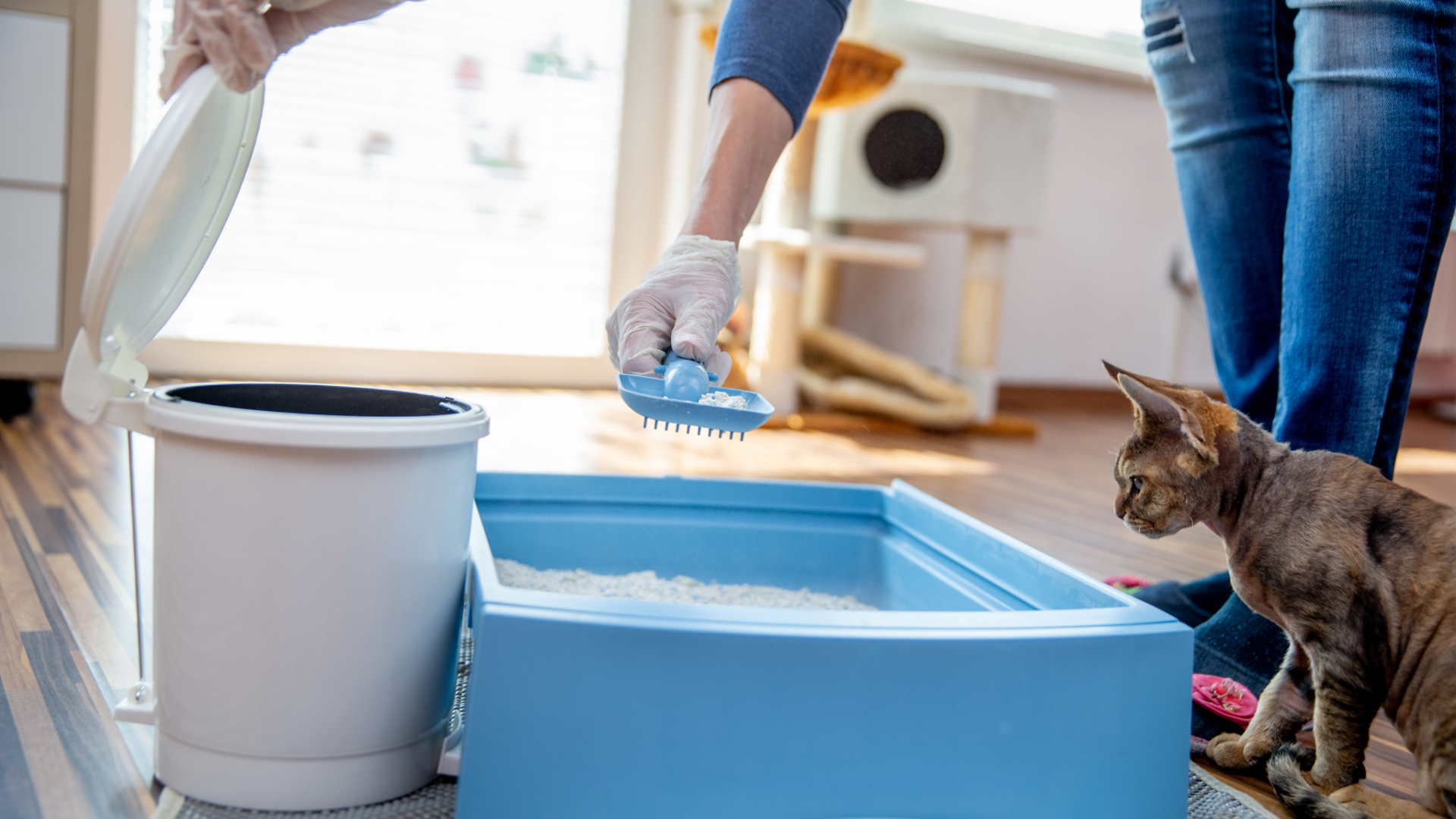
Scoop the litter box at least once a day. Use a sturdy scoop with a slotted design. This helps sift out clumps while leaving clean litter behind. Hold the scoop at an angle to remove waste efficiently. Dispose of waste in a sealed bag to control odors.
Spot Cleaning Tips
Inspect the area around the litter box daily. Look for any scattered litter or spills. Use a small broom and dustpan to sweep up loose litter. A damp cloth can help wipe down any soiled surfaces. Keeping the area tidy prevents lingering smells and bacteria.
Dealing With Accidents
Accidents can happen outside the litter box. Blot any liquid spills with paper towels immediately. Use an enzyme-based cleaner to remove odors and stains. This prevents your cat from returning to the same spot. Ensure the area is dry before allowing your cat back.

Credit: perfectpetzzz.com
Deep Cleaning The Litter Box
Deep cleaning the litter box keeps your cat’s space fresh and healthy. Regular cleaning prevents odors and bacteria buildup. It also makes your cat more comfortable and encourages good litter habits. Follow these steps for a thorough clean.
Emptying And Washing
Start by removing all the old litter. Use a scoop or pour it into a trash bag carefully. After emptying, rinse the box with warm water. Scrub the sides and bottom using a brush. This helps remove stuck-on waste and debris. Avoid harsh scrubbing that can damage the box.
Choosing Safe Cleaning Agents
Use mild soaps or pet-safe cleaners only. Avoid bleach or ammonia, which harm cats. Vinegar diluted in water is a good natural option. It cleans and neutralizes odors without harsh chemicals. Always rinse the box well to remove all soap or cleaner residue.
Drying And Refilling
Let the litter box dry completely before adding new litter. Use a towel or air dry in sunlight if possible. Drying stops bacteria growth and keeps litter fresh longer. Pour fresh litter evenly, filling to about two to three inches. This depth helps cats dig and cover waste easily.
Controlling Odors
Controlling odors in your cat’s litter box is essential for a fresh-smelling home and a happy pet. Unpleasant smells can quickly build up if you don’t take steps to manage them effectively. Let’s look at some simple, practical ways to keep those odors under control.
Using Baking Soda
Baking soda is a fantastic, affordable tool to reduce litter box smells. You can sprinkle a thin layer at the bottom of the litter box before adding fresh litter. This helps absorb moisture and neutralize odors naturally.
I once noticed a huge difference after adding baking soda regularly. The litter stayed fresher longer, and my home smelled cleaner. Have you tried this simple trick yet?
Litter Deodorizers
Special litter deodorizers are designed to work alongside your cat litter to trap and mask smells. These come in powders, sprays, or crystals and can be mixed into the litter or applied on top.
Look for products free of harsh chemicals, especially if your cat has sensitive paws or respiratory issues. Adding a deodorizer can significantly cut down on the “cat box” smell without overwhelming your senses.
Proper Ventilation
Good airflow around the litter area helps reduce odor buildup. Place the litter box in a well-ventilated room or near an open window if possible. This simple change can make a big difference in how quickly smells dissipate.
Have you noticed how a stuffy room holds odors longer? Improving ventilation not only benefits your nose but also creates a more comfortable space for your cat. Try combining this with other odor control methods for best results.
Maintaining A Healthy Environment
Maintaining a healthy environment around your cat’s litter box is key to keeping your home fresh and your cat happy. A clean space prevents bad smells and reduces the risk of infections for both pets and people. Simple habits help create a safe and pleasant area for everyone.
Regular Litter Replacement
Change the litter completely at least once a week. This stops bacteria and odors from building up. Scoop out solid waste daily to keep the box clean. Use a scoop with small holes to remove clumps easily. Fresh litter encourages your cat to use the box regularly.
Avoiding Litter Tracking
Choose a litter that clumps well and reduces dust. Place a mat under and around the litter box to catch stray litter. Clean the mat often by shaking or vacuuming. Trim your cat’s nails regularly to reduce tracking outside the box. These steps keep litter from spreading in your home.
Keeping The Surrounding Area Clean
Wipe the outside of the litter box weekly with mild soap and water. Sweep or vacuum the floor near the box every few days. Avoid harsh cleaners that can harm your cat. Store litter in a sealed container to keep it dry and fresh. A clean space makes the litter box more inviting for your cat.

Credit: www.petplan.co.uk
Frequently Asked Questions
How Often Should I Clean Cat Litter Boxes?
Clean cat litter boxes at least once daily to remove clumps and waste. Full litter should be replaced weekly to maintain hygiene and prevent odors.
What Is The Best Way To Deep Clean Cat Litter Boxes?
Empty the litter completely, then wash the box with mild soap and warm water. Avoid harsh chemicals that can harm cats. Dry thoroughly before adding fresh litter.
Can I Use Natural Cleaners For Cat Litter Boxes?
Yes, natural cleaners like vinegar and baking soda effectively remove odors and stains. They are safe for cats and environmentally friendly alternatives to chemical cleaners.
How Do I Prevent Strong Odors From Cat Litter?
Scoop waste daily and change litter regularly. Use clumping litter and consider adding deodorizing products or activated charcoal to control odors effectively.
Conclusion
Cleaning cat litter regularly keeps your home fresh and your cat happy. Use simple tools and safe cleaners for best results. Scoop waste daily to prevent odors and bacteria. Change the litter completely every week or two. Rinse the box with warm water and mild soap.
Dry it well before adding new litter. A clean litter box shows you care about your pet’s health. Small steps make a big difference in cleanliness. Keep your routine easy and consistent for lasting success. Your cat will thank you with better behavior and comfort.

Lily Purrington is the founder of MyKittyPicks.com, a cozy corner of the web dedicated to helping cat lovers discover the best cat products, furniture, toys, and home decor ideas.
A lifelong cat enthusiast, Lily shares trusted tips, honest product recommendations, and stylish inspiration designed to keep kitties happy and homes beautiful.
Her mission is simple: to bring together practical advice and purr-fect picks that make life better for cats and the people who love them.


